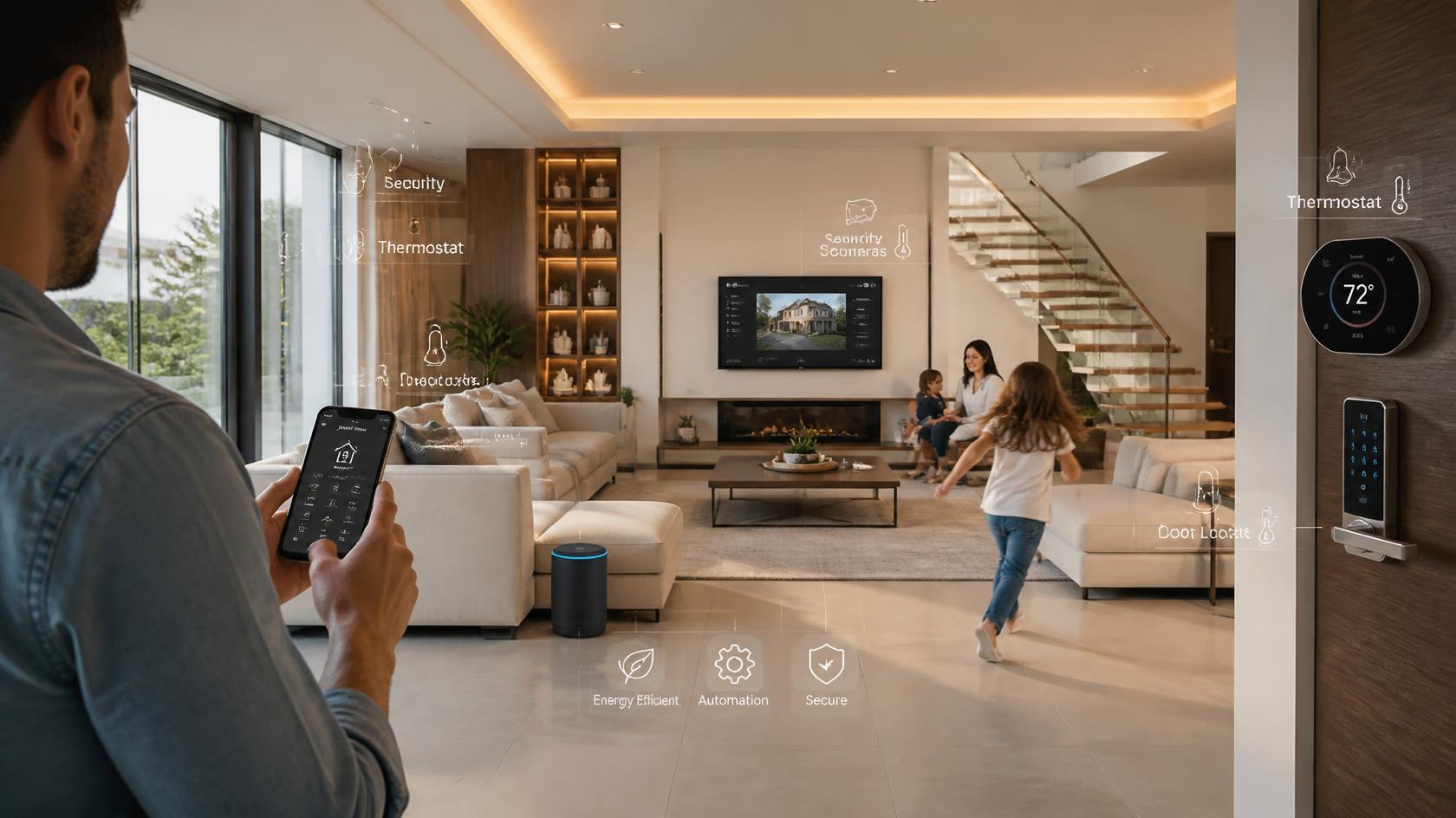
Smart Home Features That Increase Property Value: A Complete Guide for Modern Homeowners
Technology has transformed nearly every aspect of our daily lives, and our homes are no exception. What was once considered a luxury—such as controlling lights from a smartphone or unlocking a front door remotely—has become an expected feature for many buyers. Today's homeowners are looking for properties that offer convenience, security, energy efficiency, and seamless connectivity. As a result, smart home technology has evolved from a trend into a valuable investment that can significantly enhance a property's appeal and market value.
Whether you are preparing to sell your home or planning long-term improvements, incorporating smart home features can make your property stand out in a competitive market. Buyers increasingly appreciate homes that reduce energy costs, simplify everyday tasks, and provide enhanced security. These features not only improve the living experience but can also influence purchasing decisions and justify higher asking prices.
However, not all smart home upgrades deliver the same return on investment. Understanding which technologies buyers value most allows homeowners to make informed decisions and invest in improvements that provide both immediate convenience and long-term financial benefits.
This comprehensive guide explores the most valuable smart home features, how they impact property value, and why they have become an essential consideration in modern real estate.
The Rise of Smart Homes
Over the past decade, advances in wireless technology, artificial intelligence, and home automation have dramatically changed buyer expectations.
Modern homeowners now expect homes to provide:
Greater convenience
Enhanced security
Improved energy efficiency
Better connectivity
Automated daily routines
Remote monitoring capabilities
As technology becomes more affordable and accessible, smart home features are no longer limited to luxury properties. Homes across a wide range of price points now include intelligent systems that improve comfort and simplify daily living.
Why Smart Home Features Increase Property Value
Smart home technology adds value because it addresses practical needs that matter to buyers.
Many buyers view these upgrades as investments that reduce future expenses and improve quality of life.
Smart home improvements often:
Differentiate a property from competing listings
Increase buyer interest
Improve online listing appeal
Reduce energy consumption
Enhance security
Demonstrate modern maintenance
Support faster home sales
In competitive markets, these advantages can help properties attract stronger offers.
Smart Security Systems
Security remains one of the most requested smart home features.
Modern security systems provide homeowners with greater control and peace of mind through mobile applications and real-time alerts.
Popular security upgrades include:
Smart doorbells with video cameras
Motion detection systems
Smart locks
Window and door sensors
Indoor and outdoor surveillance cameras
Alarm systems
Remote monitoring
These systems allow homeowners to monitor their property from virtually anywhere, making them especially attractive to busy professionals and frequent travelers.
Smart Thermostats
Heating and cooling account for a significant portion of household energy consumption.
Smart thermostats automatically adjust indoor temperatures based on occupancy, schedules, and weather conditions.
Benefits include:
Lower utility bills
Improved comfort
Energy efficiency
Remote temperature control
Usage reports
Automated scheduling
Buyers increasingly recognize these systems as practical upgrades that provide long-term savings.
Smart Lighting Systems
Lighting automation combines convenience with energy efficiency.
Homeowners can:
Schedule lighting
Control lights remotely
Adjust brightness
Create customized lighting scenes
Integrate lighting with voice assistants
Motion-activated lighting also improves safety around entrances, garages, and outdoor walkways.
Smart Door Locks
Traditional keys are gradually being replaced by digital access systems.
Smart locks allow homeowners to:
Lock or unlock doors remotely
Create temporary guest access
Monitor entry activity
Eliminate lost keys
Improve security
These features are particularly valuable for families, short-term rental owners, and busy professionals.
Voice-Controlled Home Automation
Voice assistants have become central hubs for many smart homes.
Integrated systems allow homeowners to control:
Lighting
Thermostats
Music
Appliances
Security systems
Window shades
Entertainment devices
Hands-free operation adds convenience while creating a modern living experience.
Smart Appliances
Connected appliances continue gaining popularity among buyers.
Examples include:
Smart refrigerators
Wi-Fi enabled ovens
Intelligent washing machines
Smart dishwashers
Connected coffee makers
Many appliances provide maintenance reminders, energy monitoring, and remote operation through mobile applications.
Energy-Efficient Smart Technology
Energy efficiency has become a major consideration for modern buyers.
Smart energy features include:
Automated irrigation systems
Smart water heaters
Solar energy monitoring
Smart electrical panels
Energy monitoring devices
These systems help homeowners reduce utility costs while supporting environmentally responsible living.
Smart Garage Systems
Modern garage technology offers greater convenience and security.
Features include:
Smartphone-controlled garage doors
Delivery access management
Activity notifications
Automatic closing schedules
Integration with home security systems
Buyers appreciate the added flexibility and peace of mind these systems provide.
Whole-Home Automation
Some homeowners choose integrated automation systems that connect multiple smart devices into one platform.
Examples include:
Morning routines that adjust lighting and temperature
Evening security activation
Vacation mode
Automated window coverings
Entertainment system integration
Whole-home automation creates a premium living experience that appeals to technology-focused buyers.
Should Every Homeowner Invest in Smart Technology?
Not necessarily.
Before investing, consider:
Neighborhood Expectations
Luxury neighborhoods often expect advanced technology, while entry-level markets may prioritize affordability.
Return on Investment
Focus on upgrades that offer practical daily benefits rather than expensive features with limited appeal.
Ease of Use
Technology should simplify life, not complicate it.
Choose systems that are intuitive, reliable, and compatible with widely used platforms.
Common Mistakes to Avoid
Homeowners sometimes reduce the effectiveness of smart upgrades by making avoidable mistakes.
Examples include:
Installing incompatible devices
Choosing overly complex systems
Ignoring cybersecurity
Failing to maintain software updates
Purchasing low-quality products
Overinvesting beyond neighborhood expectations
Well-planned upgrades consistently outperform unnecessary technology.
The Future of Smart Homes
Technology continues advancing rapidly.
Future smart homes may include:
Artificial intelligence that learns homeowner routines
Predictive maintenance systems
Advanced energy optimization
Improved healthcare monitoring
Integrated electric vehicle charging
Enhanced environmental controls
As innovation continues, homes equipped with adaptable technology are likely to remain attractive to future buyers.
Frequently Asked Questions
Do smart home features really increase property value?
Yes. Many buyers actively seek homes with smart security, energy-efficient systems, and automation features because they improve convenience and reduce operating costs.
Which smart home upgrade provides the best return?
Smart thermostats, security systems, video doorbells, and smart lighting often provide excellent value while remaining relatively affordable.
Are smart homes more energy efficient?
Yes. Many smart devices automatically reduce unnecessary energy usage through scheduling, occupancy detection, and remote management.
Can older homes be converted into smart homes?
Absolutely. Many smart devices are designed for easy installation and can be added to existing homes without major renovations.
Should I install smart technology before selling my home?
Strategic upgrades can improve buyer interest and help your property compete more effectively, particularly in technology-conscious markets.
Are smart homes safe from cyber threats?
Most systems are secure when homeowners use strong passwords, enable two-factor authentication, and regularly update device software.
Conclusion
Smart home technology has become much more than a modern convenience—it has become an important factor influencing property value and buyer expectations. As homeowners increasingly prioritize security, energy efficiency, convenience, and connectivity, thoughtfully selected smart home features can significantly improve a property's appeal and marketability.
The most valuable upgrades are those that simplify daily life while delivering measurable benefits. From intelligent security systems and smart thermostats to automated lighting and energy management solutions, these technologies create homes that are more comfortable, efficient, and attractive to today's buyers. Investing in practical, reliable smart home improvements not only enhances your current living experience but can also strengthen your property's resale value in the future.
At Elijah Prime Homes, we understand how evolving technology is reshaping today's real estate market. Whether you're preparing your home for sale, searching for a modern smart home, or planning improvements that maximize long-term value, our experienced team is here to guide you every step of the way. We combine local market expertise with personalized advice to help you make smart real estate decisions that benefit both your lifestyle and your investment.
